AI predictions have a habit of going one of two ways. Either they promise that everything is about to change overnight, or they are so vague that almost anything can count as being right.
The reality in 2026 is a little more useful.
A recent Wise article highlighted five major themes for the year: AI agents, businesses creating more tailored AI systems, measurable returns from specific types of work, AI becoming embedded into existing software, and the continued importance of human oversight. Six months into the year, there is already plenty of evidence to test those ideas against.
For small businesses, the important question is not whether every prediction comes true. It is where AI can genuinely save time, improve a process or remove repetitive work without creating a bigger problem somewhere else.
Here is our view.
1. AI agents will start doing jobs, not just answering questions
1. AI agents will start doing jobs, not just answering questions
Most people first experienced generative AI as a chatbot: ask a question, get an answer.
Agents go a step further. Instead of simply telling you what to do, an agent can potentially complete a sequence of steps across different systems. That could mean reading a support request, checking the customer record, looking up an order, applying a company policy and preparing or carrying out an approved action.
That is no longer just a future concept. Google and OpenAI now offer enterprise systems specifically designed around agents that connect to company tools, follow permissions and operate across multi-step workflows. Gartner forecasts that up to 40% of enterprise applications will contain task-specific agents by the end of 2026, compared with less than 5% when it made the forecast in 2025.
But there is an important reality check. Stanford’s 2026 AI Index found that actual agent deployment was still in the single digits across nearly all business functions during 2025.
So yes, agents are coming. No, you probably do not need an army of digital employees next Tuesday.
For SMEs, the best starting point is one well-defined process with a clear outcome and clear limits.
2. The most useful AI will disappear into the software you already use
2. The most useful AI will disappear into the software you already use
The biggest AI change may be the one you notice least.
Deloitte predicts that daily use of generative AI inside search engines will be three times more common than use of standalone GenAI tools in 2026 and beyond. More broadly, it expects much of AI’s growth to come through features added to software people already use.
That makes sense for a business.
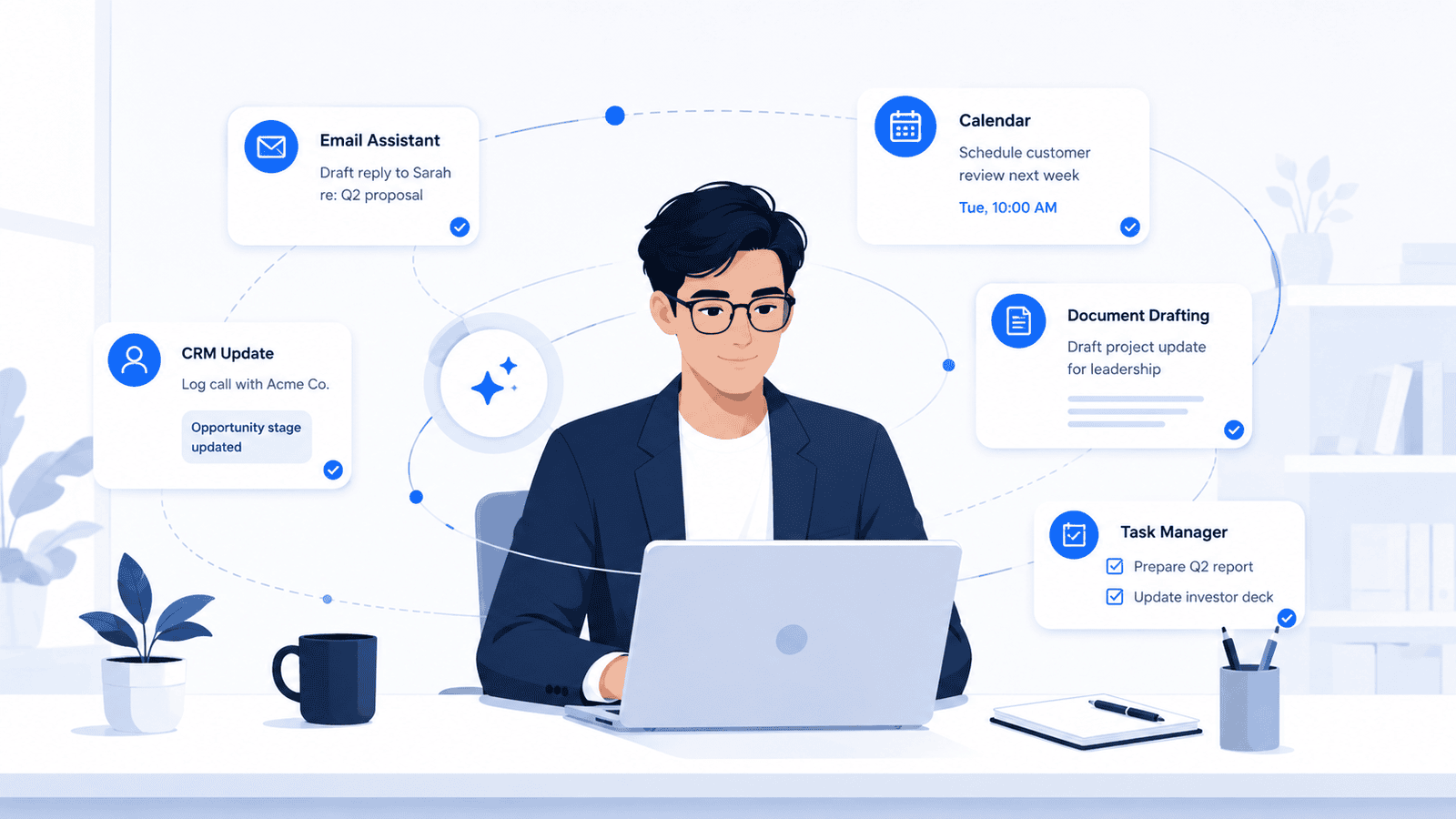
Opening another AI website, copying information into it and then copying the result back into your CRM is not much of an automation. The bigger opportunity is AI working directly inside your email, CRM, finance system, help desk or document workflow.
For an SME, that could look like an incoming enquiry being classified automatically, a CRM record being updated, a draft response being prepared and the right colleague being asked for approval.
The AI itself becomes less interesting. The workflow becomes more important.
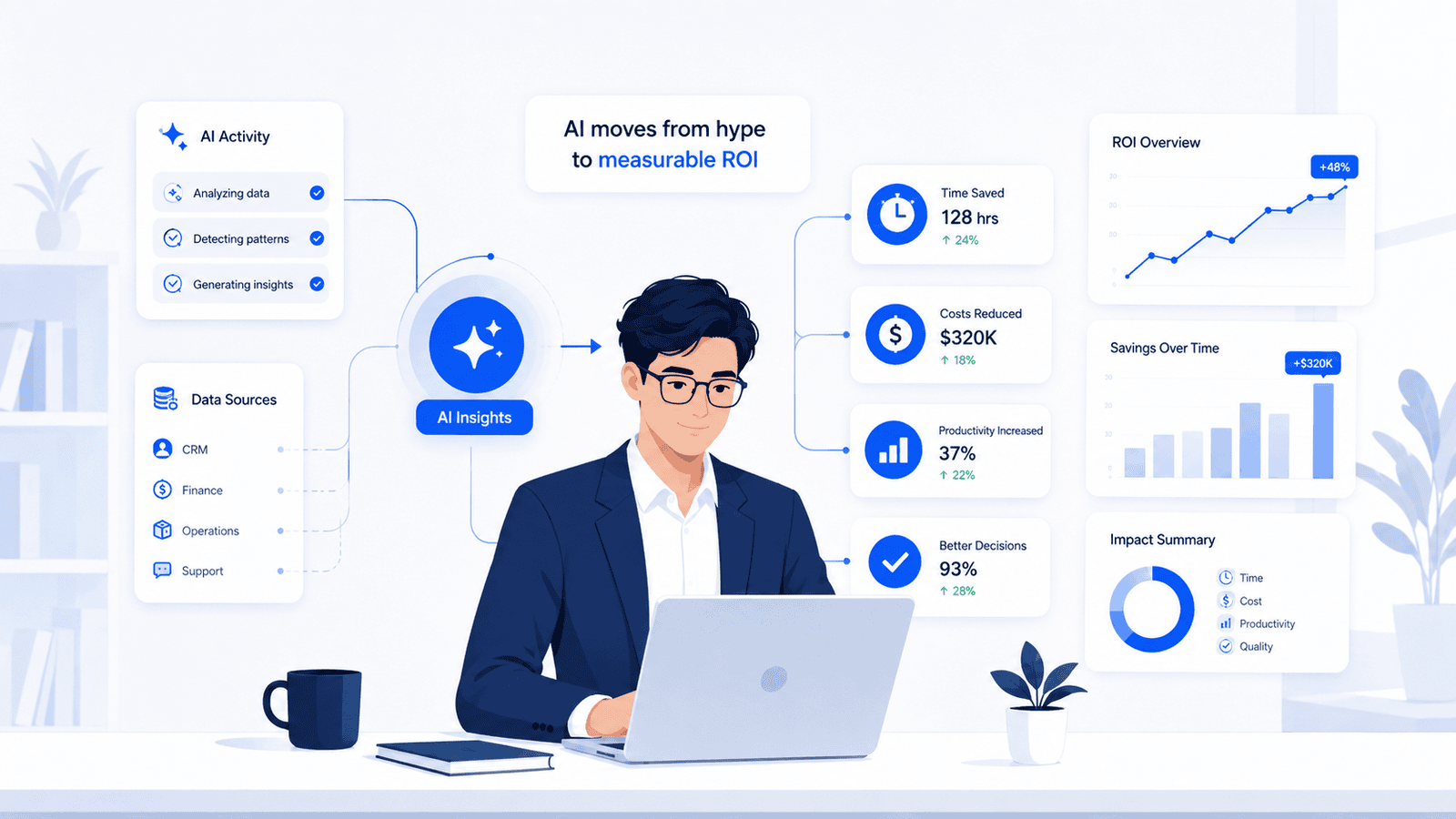
3. AI value will be found in boring, measurable work
3. AI value will be found in boring, measurable work
This might be the least exciting prediction, but probably the most useful.
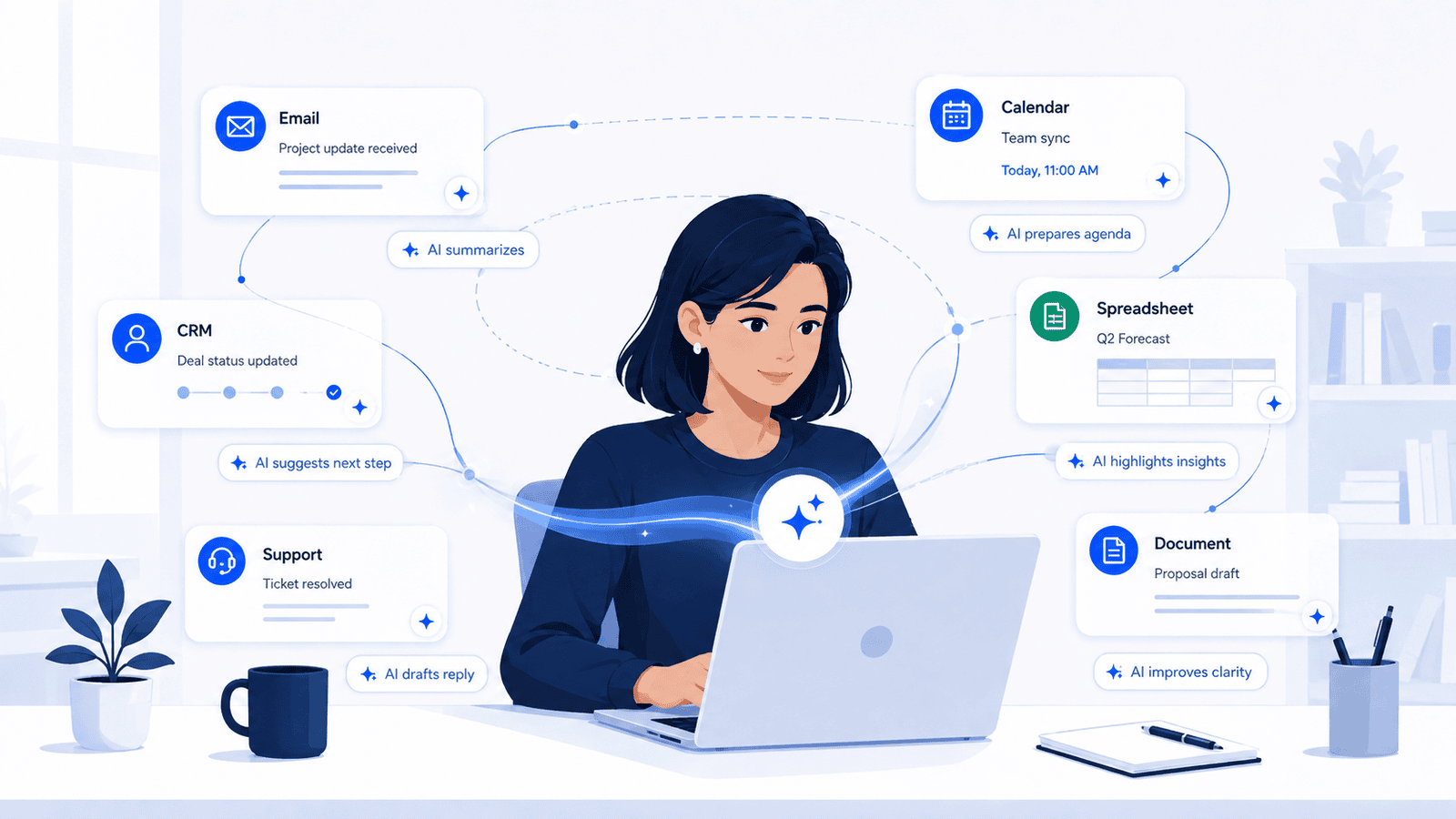
Stanford’s review of productivity research found some of the largest gains in structured, measurable tasks, including customer support, software development and marketing output. OpenAI’s own enterprise research similarly reports substantial numbers of users seeing faster marketing execution and IT issue resolution.
That points SMEs towards a simple rule: look for work that happens frequently, consumes measurable time and has an output you can check.
Good candidates might include first drafts of routine content, customer-service triage, meeting or document summaries, data classification, recurring reports, information retrieval, invoice processing or preparing information before a human makes a decision.
That does not mean every process should use AI. If a conventional workflow or automation rule can do the job more reliably and cheaply, use that instead.
AI should solve a problem, not become the problem.
4. You may need your own AI workflow, but not your own AI model
4. You may need your own AI workflow, but not your own AI model
Wise suggests businesses should consider building their own AI tools rather than relying entirely on generic products. The underlying point is sound, but for an SME we would interpret it differently.
Building your own AI does not have to mean training a giant model.
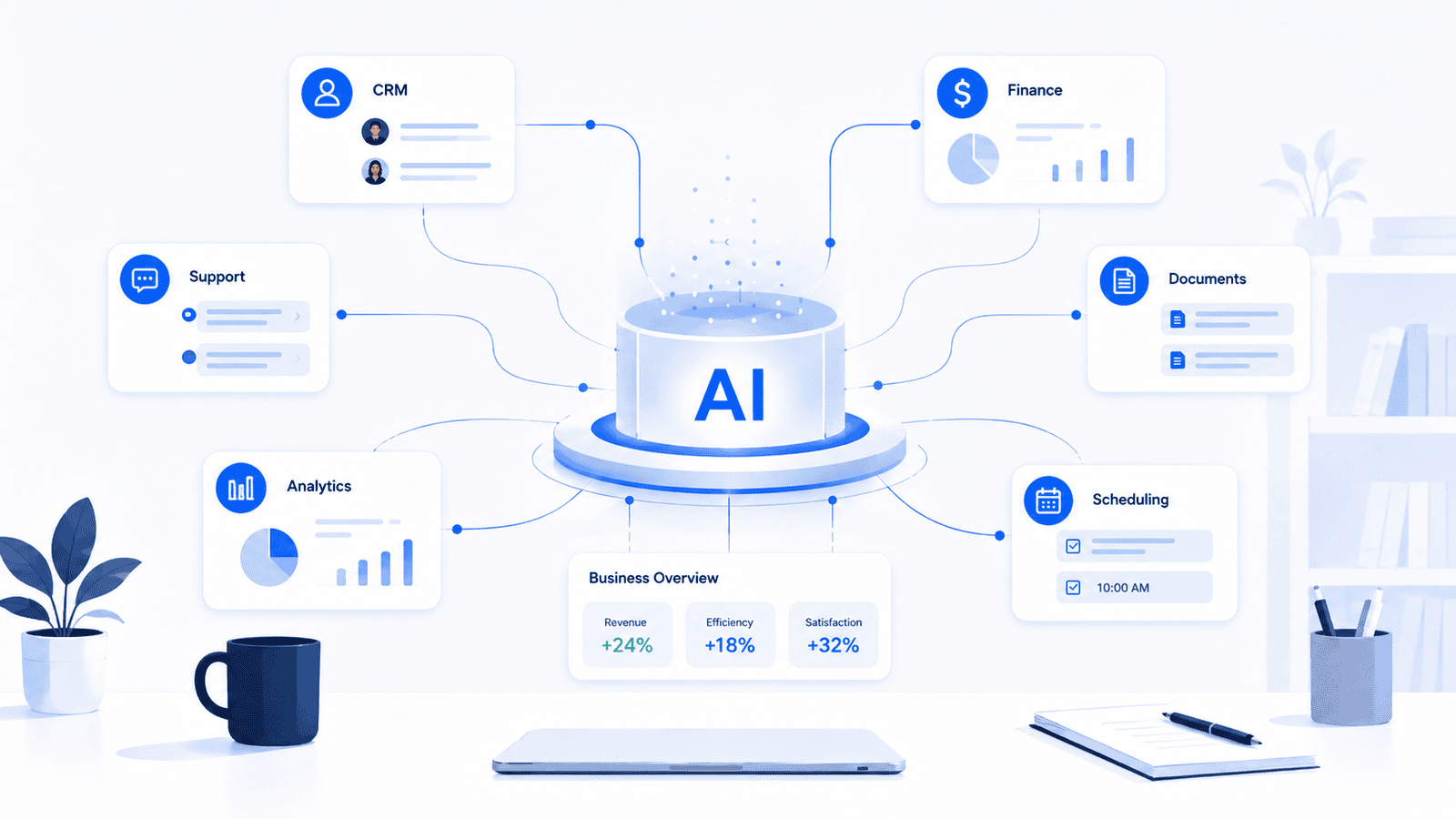
In many cases, the more practical approach is to use an established model while building your own business logic around it: your data sources, CRM records, approval rules, permissions, integrations and processes.
Current enterprise AI platforms are moving in exactly this direction. Google, for example, now supports multiple first-party and third-party models inside one agent platform, alongside orchestration, identity, security and evaluation tools.
That is useful because the “best” model will keep changing. Stanford reports that leading models are increasingly close on headline performance, shifting more of the practical decision towards reliability, cost and performance for a particular domain.
For most SMEs, your competitive advantage is unlikely to be the underlying language model. It is much more likely to be how well AI understands and fits your business process.
5. Human oversight becomes more important as AI gets more capable
5. Human oversight becomes more important as AI gets more capable
The more an AI system can do, the more important its boundaries become.
An AI writing a first draft presents a very different level of risk from an AI that can modify a customer account, trigger a payment, send an external message or access confidential business data.
The UK government’s voluntary AI cyber security code calls for defined business requirements, security risk assessment, staff training, audit trails, controlled permissions, testing and human responsibility. EU requirements also impose human-oversight duties in specified high-risk uses.
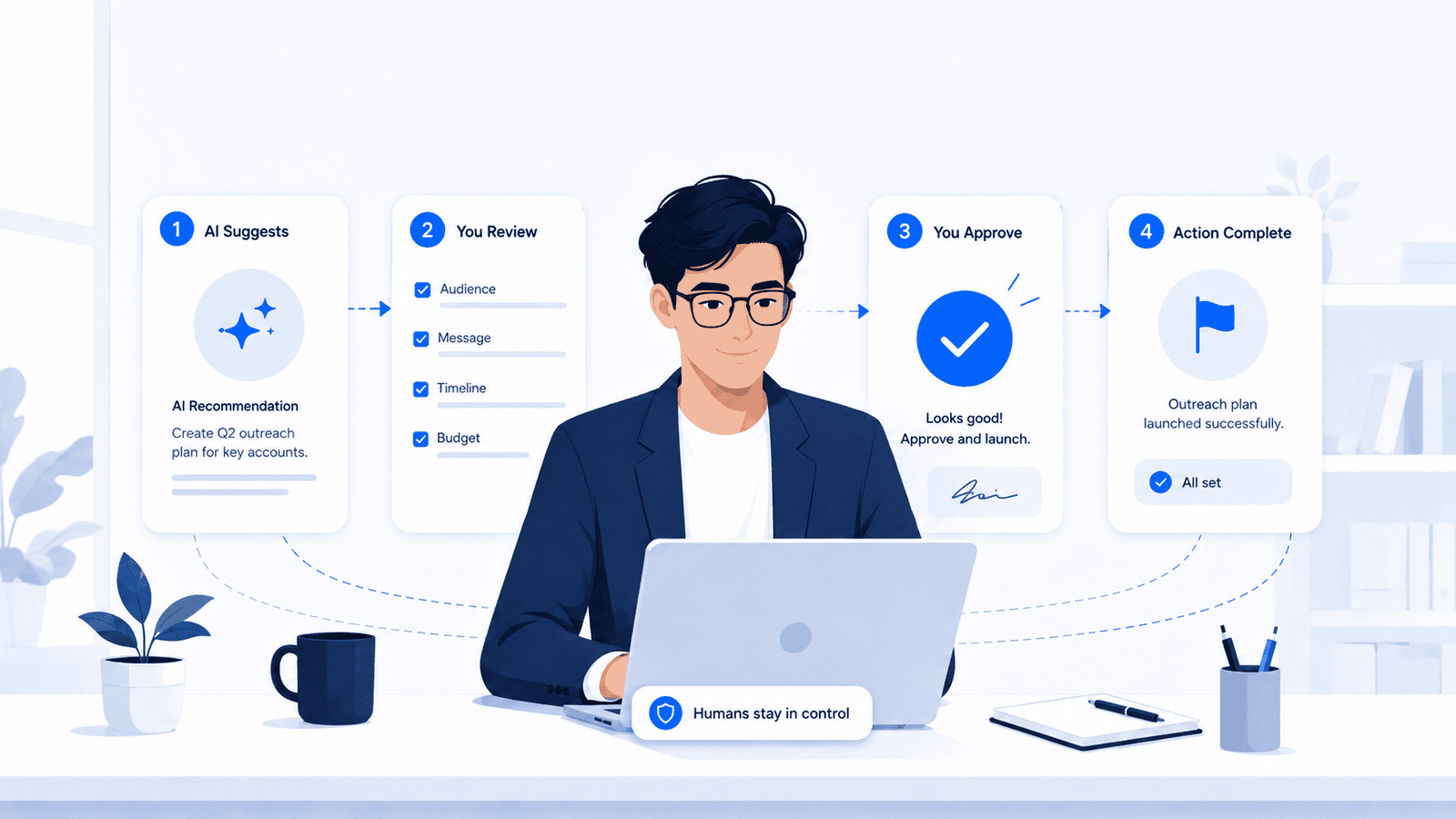
This is why “human in the loop” needs to mean more than somebody glancing at an answer.
A sensible AI workflow should make it clear what the AI can access, what it is allowed to do automatically, what requires approval, what gets logged and when a person must take over.
That becomes particularly important around money, personal information, contractual commitments, security and regulated decisions.
What should small businesses do now?
What should small businesses do now?
Start with the process, not the AI product.
Find a repetitive task that genuinely costs the business time. Decide what a successful outcome would look like and how you will measure it. Work out what information the AI needs, what systems it needs access to and where a human approval step belongs.
Then run a controlled pilot.
If the result saves meaningful time without introducing unacceptable errors, security problems or additional administration, expand it. If it does not, stop.
That may sound less exciting than announcing an “AI transformation programme”, but it is much more likely to produce something useful. The available evidence increasingly suggests that organisational readiness, integration and workflow design matter at least as much as having access to a capable model.
Final thoughts
Final thoughts
Wise is right about the overall direction: AI is moving deeper into everyday business processes, agents are becoming more capable, and people will increasingly supervise AI rather than simply ask it questions.
But for small businesses, 2026 does not need to be about chasing every new AI launch.
The opportunity is simpler: identify work that should take less time, connect the right technology to the right process, and keep sensible controls around it.
After all, the smartest use of AI is the one that genuinely makes your work, less work.
Contact
Get in touch with the team to discuss how we support your business with practical, people-first technology and long-term solutions.
About
Learn who we are, what we stand for, and how Ostratto helps businesses make their work, less work through practical technology solutions.
Our Approach
Discover how we partner with you - focusing on strategy, simplicity and long-term value to deliver technology that truly supports your business.